
A Traditional Chinese Medicine Guide for Busy Professionals
You finish work, but your body does not know the day is over.
Your laptop is closed, but your shoulders are still up by your ears. You are home, but your brain is still in the meeting. You worked out, took your supplements, answered the emails, handled the decisions, solved the problems — and somehow, you still do not feel well.
This is something we see often at The Great Turning Acupuncture in Northern Liberties, Philadelphia.
High-functioning is not the same as healthy.
Many busy professionals are doing a lot of the “right” things. But their bodies are telling a different story.
So the real question becomes:
Are you healthy — or are you just pushing through?
Part 1: When Success Comes With a Cost
This Article Is for You If…
You are successful, capable, and responsible — but your body feels like it is carrying more than it should.
You may be managing a team, running a business, building a career, traveling for work, or taking care of everyone around you.
On paper, you are functioning. You may even be performing very well.
But inside, you may notice:
- Your shoulders are always tight
- Your digestion feels weaker than it used to
- Your appetite is low or inconsistent
- Your sleep does not fully restore you
- You feel tired but wired
- You work out, but still feel tense
- You have trouble relaxing when the workday ends
- You want to enjoy life more, but your body does not know how to come down
If this sounds familiar, your body may not be broken.
It may need a better way to recover.
Functioning Is Not the Same as Healthy
Many people confuse functioning with health.
If you can get through the day, keep working, exercise, and keep up appearances, it may look like everything is fine.
But in Traditional Chinese Medicine, health is not only about how much you can accomplish. It is also about how well your body can recover.
For a busy professional, a healthy lifestyle is not a perfect routine.
It is the ability to return to yourself after stress.
A Personal Note
As a newer business owner, I understand how easily meaningful work can ask for more hours, focus, and energy than expected.
Running a practice means learning new skills all the time — patient care, marketing, administration, finances, and community relationships — while still trying to live the principles I teach.
So this question is not theoretical for me:
What does a healthy lifestyle mean when life is full, demanding, and not always predictable?
I do not believe health is about perfection. I see it as rhythm, awareness, and recovery.
A healthy lifestyle cannot only be something we do when everything is calm. It has to be something we can return to in the middle of real life.
Part 2: Why Your Body May Feel Stuck in Stress Mode
The Hidden Cost of Always Being On
The body was not designed to treat every email, deadline, meeting, and decision like an emergency.
When work requires long hours, constant focus, frequent travel, and high responsibility, the nervous system may stay activated even after work is done.
Many people respond by pushing harder:
- More coffee
- More workouts
- More supplements
- More discipline
- More productivity
But if the body is not recovering, more effort is not always the answer.
Sometimes the body does not need to be pushed harder.
Sometimes it needs to be taught how to come down.
The Traditional Chinese Medicine Perspective
Traditional Chinese Medicine views health as rhythm and relationship.
- Work and rest
- Movement and stillness
- Effort and recovery
- Digestion and nourishment
- Focus and enjoyment
- Strength and softness
When these rhythms are disrupted for too long, symptoms begin to appear.
For busy professionals dealing with stress, burnout, neck tension, poor sleep, or digestive changes, several common TCM patterns may show up.
Part 3: Common TCM Patterns in Busy Professionals
Liver Qi Stagnation: The Pressure Valve Is Stuck
In Chinese medicine, the Liver system helps regulate the smooth flow of Qi through the body.
When life is demanding, stressful, frustrating, or overly controlled, Qi may stop moving smoothly. This is often called Liver Qi stagnation.
It may feel like the pressure valve is stuck.
Signs may include:
- Neck and shoulder tension
- Tightness in the chest, ribs, or upper back
- Jaw clenching
- Headaches
- Irritability
- Trouble taking a deep breath
- Digestive symptoms that worsen with stress
- Difficulty relaxing even when you have time
From this perspective, tension is not only a muscle problem. It may be a sign that the whole system has been bracing under too much pressure.
Acupuncture treatment often focuses on helping Qi move more smoothly so the body can soften, breathe, and release.
Spleen Qi Weakness: The Fuel System Is Struggling
In Traditional Chinese Medicine, the Spleen system is closely related to digestion, appetite, energy production, and the body’s ability to transform food into nourishment.
Long work hours, overthinking, irregular meals, eating while working, travel, and constant mental demand can weaken this system over time.
This may show up as:
- Weak appetite
- Bloating
- Feeling tired after eating
- Brain fog
- Irregular digestion
- Cravings
- Low energy
- Feeling like food does not fully nourish you
Supplements can be helpful, but they are not a substitute for digestion.
From a TCM perspective, it is not only what you take in. It is what your body can transform, absorb, and use.
Persistent digestive symptoms should also be discussed with a qualified healthcare provider.
Blood and Yin Depletion: The Battery Is Running Low
Some people are not just tense. They are depleted.
They have been working hard, traveling, exercising, managing stress, and drawing from their reserves for a long time.
In Traditional Chinese Medicine, this may involve depletion of Blood, Yin, or deeper constitutional resources. In plain language, the battery is being drained faster than it is being charged.
This may show up as:
- Feeling wired but tired
- Difficulty sleeping deeply
- Muscle tightness that keeps returning
- Lower stress tolerance
- Difficulty enjoying downtime
This does not mean the person is weak.
Often, these are people who have been strong for a long time.
But even strong people need restoration.
Severe sleep disruption, significant anxiety, or major mood changes should also be discussed with a qualified healthcare provider.
Shen Disturbance: The Mind Has No Landing Place
In Chinese medicine, the Shen refers to the mind, spirit, awareness, and emotional presence.
When the Shen is unsettled, a person may feel restless, mentally busy, emotionally disconnected, easily irritated, or unable to switch off.
For many busy professionals, the mind has no landing place.
The day ends, but the inner activity continues.
This is why relaxation may not happen automatically. The body may need help remembering how to return to rest.
Part 4: Self-Check — Are You Recovering or Just Pushing Through?
Ask yourself:
- Are my shoulders often tight by the end of the day?
- Do I have trouble relaxing, even when I have free time?
- Do I eat while working or forget to eat?
- Is my appetite weak or inconsistent?
- Do I feel bloated or uncomfortable after meals?
- Do I work out, but still feel tense or depleted?
- Do I wake up already thinking about work?
- Do I need screens, food, alcohol, exercise, or distraction to come down?
- Do I rarely feel deeply rested?
- Am I productive, but not necessarily joyful?
If several of these feel familiar, your lifestyle may look healthy from the outside, but your nervous system may not be recovering well.
This does not mean something is wrong with you.
It means your body may be asking for support.
Part 5: The Solution — Build Recovery Into Real Life
What Does a Healthy Lifestyle Look Like With a Demanding Career?
For a busy professional, a healthy lifestyle is not about doing everything perfectly.
It means your daily life includes small, repeatable ways to help your body return to balance.
A healthy lifestyle with a high-demand career may look like this:
- You work hard, but you can recover
- You exercise, but you also rest
- You eat in a way that supports digestion
- You notice tension before it becomes pain
- You can shift out of work mode
- You sleep enough to repair
- You enjoy moments that are not tied to achievement
- You do not wait until your body breaks down before you care for it
Health is the ability to return to yourself.
The Missing Skill: Switching From Performance to Presence
Many successful people know how to work.
They know how to push, focus, lead, solve, plan, train, and produce.
But they may not know how to stop.
Switching off is a skill.
A simple transition ritual can tell the body:
“The workday is over. You are safe to come down.”
It can be as simple as:
- Taking a short walk after work
- Changing clothes when you get home
- Taking five slow breaths before entering the house
- Stretching your neck and shoulders
- Putting the phone away for 20 minutes
- Sitting quietly before dinner
- Taking a warm shower
- Stepping outside and feeling the air
The ritual does not need to be dramatic.
It needs to be consistent.
The body learns through repetition.
A Simple 3-Minute Practice to Help the Body Come Down
Try this at the end of the workday:
- Sit comfortably.
- Inhale through your nose for a count of four.
- Exhale slowly for a count of six to eight.
- Let your shoulders drop slightly with each exhale.
- Do not force relaxation. Just practice signaling safety to the body.
This is not about being “good at meditation.”
It is about training the nervous system to remember rest.
Part 6: Exercise — Healthy Stress or One More Demand?
Exercise is important. For many high-demand professionals, it is one of the few reliable outlets for stress.
But exercise is also a stressor.
A strong workout can be healthy when the body has enough recovery. But if you are already under high work stress, sleeping poorly, eating irregularly, and feeling tense all the time, intense exercise may become one more demand on an overloaded system.
Signs Your Exercise Routine Is Supporting You
- You feel better after working out
- Your appetite remains steady
- Your sleep is not disrupted
- Your muscles recover well
- Your mood improves
- You can take a rest day without guilt
Signs Your Exercise Routine May Need More Recovery
- You feel depleted after workouts
- Your sleep gets worse
- Your appetite drops
- You are constantly tight
- You feel irritable or restless
- You need intense exercise to feel emotionally regulated
- You feel guilty when you rest
The goal is not to stop moving.
The goal is to build strength without draining the system.
Part 7: How Acupuncture Can Help
Acupuncture for Stress, Burnout, and Recovery
Acupuncture gives the body a structured pause.
For many people, an acupuncture treatment is one of the few times in the week when the nervous system is not being asked to perform, solve, respond, produce, manage, or achieve.
During treatment, breathing may deepen. Muscles may soften. The mind may become quieter. Digestion may begin to regulate. The body may remember what it feels like to rest.
At The Great Turning Acupuncture, treatment is individualized. Two people may both have stress, but one may need more digestive support, another more sleep support, another more help with tension, and another more emotional regulation.
From a Traditional Chinese Medicine perspective, acupuncture may support:
- Stress recovery
- Burnout support
- Neck and shoulder tension
- Muscle relaxation
- Nervous system regulation
- Digestive function
- Sleep and recovery
- Emotional steadiness
- A better rhythm between effort and rest
The goal is not simply to chase symptoms.
The goal is to understand the pattern and help the body return to a healthier rhythm.
Part 8: A Better Question Than “Am I Doing Enough?”
Many people with demanding careers already feel like they are not doing enough.
Not eating well enough.
Not sleeping enough.
Not meditating enough.
Not stretching enough.
Not managing stress well enough.
But health should not become another performance review.
A better question is:
What would help my body recover today?
Some days, the answer may be acupuncture. Some days, it may be a real meal, an earlier bedtime, a walk without your phone, or doing less.
The body does not always need a complete life overhaul.
Often, it needs small, consistent signals of care.
Final Thought
You may not be able to make your career less demanding overnight.
But you can teach your body that life is not only work, pressure, and performance.
You can build recovery.
You can feel your appetite return.
You can loosen your shoulders.
You can sleep more deeply.
You can remember how to enjoy your life again.
A healthy lifestyle with a demanding career is possible — but it has to be sustainable, honest, and built around recovery.
You do not need to escape your life to become healthy.
You need a body that can recover inside the life you actually have.
Ready to Help Your Body Recover?
If this sounds familiar, you do not have to wait until your body forces you to stop.
Acupuncture can be one way to begin rebuilding recovery, easing tension, supporting digestion, improving sleep, and helping your nervous system shift out of constant work mode.
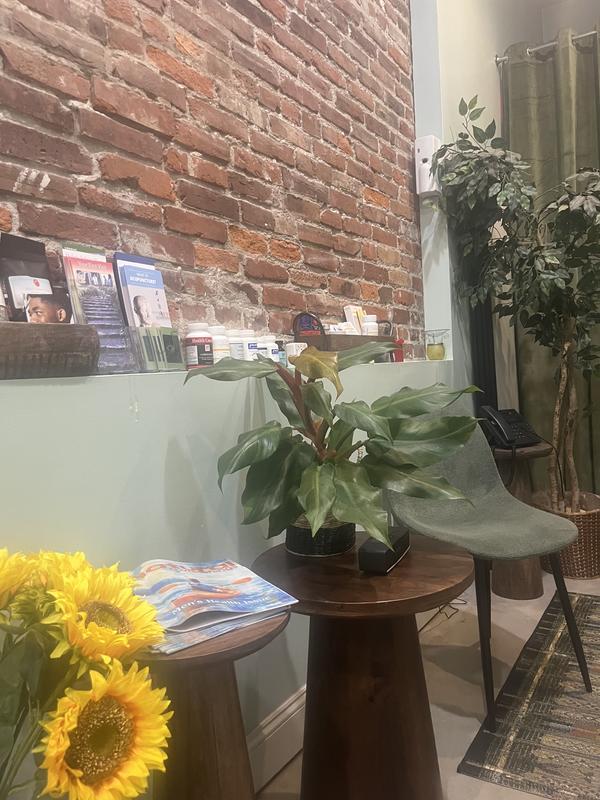
At The Great Turning Acupuncture in Northern Liberties, Philadelphia, we work with busy professionals who are successful, responsible, and capable — but whose bodies are asking for more support.
If you are dealing with stress, burnout, neck and shoulder tension, weak appetite, bloating, poor sleep, or difficulty relaxing, individualized acupuncture and Traditional Chinese Medicine care may be a good fit.
Schedule a consultation and begin building a healthier relationship with work, stress, and your body.
Disclaimer
This article is for educational purposes only and is not a substitute for medical diagnosis, mental health care, or medical treatment. Please consult your physician or qualified healthcare provider for any medical concerns, digestive symptoms, medication questions, or changes in supplements.