
"The bone healed. But the muscles, tendons, ligaments, fascia, and movement patterns also needed care."
— Beata Maslanka, MSTOM, Dip. OM, L.OM
The ankle sprain that never felt quite right.
The shoulder injury still flares up.
The fall you recovered from—but never completely forgot.
Sometimes the injuries that affect us the longest are not the ones that require surgery.
They are the ones we assume will simply heal on their own.
As an acupuncturist with more than 20 years of clinical experience, I have seen countless patients whose current pain can be traced back to an injury that occurred months—or sometimes decades—earlier.
The body remembers.
And if soft tissue injuries don't heal properly, they can continue to influence how we move long after the original injury is forgotten.
My Own Lesson in Injury Recovery
One of the reasons I feel so strongly about treating injuries properly comes from personal experience.
In 2020, shortly after the COVID lockdowns began, life already felt uncertain. Like many healthcare practitioners, I suddenly found myself unable to practice and wondering what the future would look like.
A few months later, I was visiting a farm and picking sunflowers when I tripped over a small child. Instinctively, I threw my arm out to break the fall.
My wrist took the impact.
Within minutes it was swollen and painful. An urgent care visit and X-ray confirmed that I had fractured my wrist.
The medical advice was appropriate: immobilize the wrist, allow the fracture to heal, and use pain medication as needed.
But as both an acupuncturist and herbalist, I knew the fracture was only part of the story.
The force of the fall didn't stop at my wrist.
The muscles in my forearm tightened. My shoulder became painful. My neck became stiff. My body absorbed the impact far beyond the fracture itself.
While following the recommendations for the broken bone, I also immediately began using the tools of Chinese medicine. I received acupuncture, used herbal preparations, applied plasters and liniments, practiced acupressure, and paid close attention to the soft tissues surrounding the injury.
The Bone Healed—But the Injury Was Bigger Than the Bone
The bone healed.
But the muscles, tendons, ligaments, fascia, and movement patterns also needed care.
A fracture may show up on an X-ray, but the body's response to injury extends far beyond the bone itself.
Muscles tighten to protect the injured area.
Tendons and ligaments become strained.
Movement patterns change.
The body begins to compensate.
Sometimes those compensations resolve naturally.
Sometimes they remain for years.
That experience reinforced something I had already seen repeatedly in clinical practice:
When an injury occurs, we must treat the whole injury—not just the part that appears on the X-ray.
What Are Soft Tissue Injuries?
Soft tissue injuries involve muscles, tendons, ligaments, fascia, and connective tissues.
Common examples include:
- Ankle sprains
- Back strains
- Neck injuries and whiplash
- Rotator cuff injuries
- Tennis elbow
- Sports injuries
- Repetitive strain injuries
- Falls and impact injuries
Modern medicine does an excellent job identifying fractures, serious pathology, and conditions requiring surgery.
However, many people are surprised when imaging appears normal, yet pain and dysfunction continue.
The absence of a surgical problem does not necessarily mean the tissues have fully recovered.
Healing Happens in Stages
Healing is not a single event—it is a process.
First comes inflammation, when pain, swelling, and limited movement help protect injured tissues.
Next comes repair, as the body rebuilds damaged structures and lays down new collagen fibers.
Finally comes remodeling, a process that can continue for months as tissues strengthen and movement patterns normalize.
This final stage is often overlooked. Pain may improve while stiffness, weakness, or compensation patterns remain.
Years later, these unresolved restrictions may contribute to recurring pain or injury.
The Chinese Medicine Perspective
Traditional Chinese Medicine has treated traumatic injuries for thousands of years.
Rather than focusing only on the injured structure, Chinese medicine looks at how the injury affects circulation, movement, and function throughout the body.
Treatment changes according to the stage of healing, to support recovery, restore mobility, and help the body heal as completely as possible.
A Book That Continues to Inspire Me
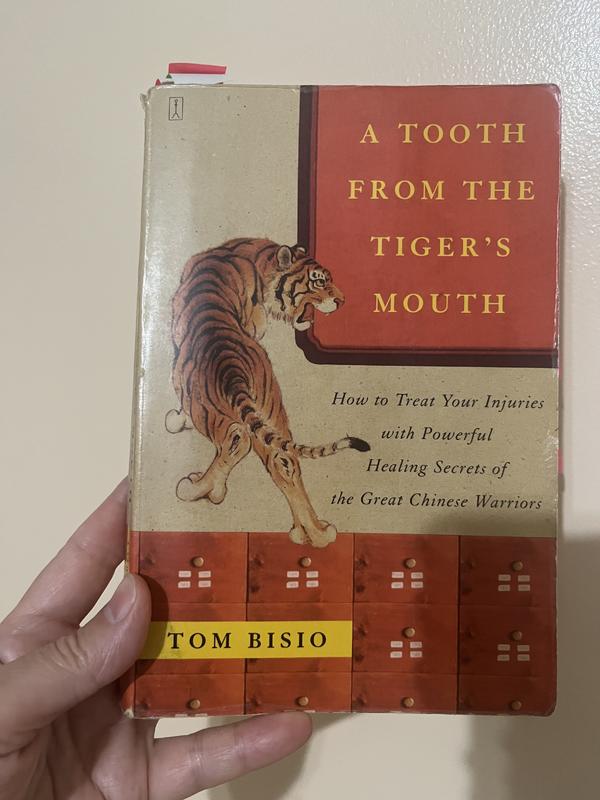
One of my favorite books is A Tooth from the Tiger's Mouth by Tom Bisio and Monica Esposito.
The book explores the traditional Chinese art of trauma medicine, often called Dit Da or "hit medicine."
One lesson from the book has stayed with me throughout my career:
How an injury heals today often determines how your body functions years from now.
Traditional Remedies for Injury Recovery
Chinese trauma medicine developed many tools to support healing, including:
- Acupuncture
- Herbal liniments
- Herbal plasters
- Cupping
- Gua sha
- Heat therapy during the later stages of healing
- Movement and rehab exercises
- Acupressure for self-care
These approaches have been used for generations to support recovery and restore healthy movement after injury.
Every Sailor, Gardener, and Weekend Warrior Needs an Injury Kit
As a sailor, I learned long ago that injuries rarely happen when it's convenient.
You don't twist an ankle while sitting comfortably at home.
You do it while moving a sail, pulling a dock line, carrying equipment, working in the garden, hiking a trail, exercising, or lifting something awkward.
That's why I believe every active person should have a simple injury kit.
My own injury kit lives in my sailing bag and travels with me wherever I go.
One of my inspirations comes from A Tooth from the Tiger's Mouth, which includes a traditional Chinese Sports Medicine First-Aid Kit used by martial artists and practitioners of Chinese trauma medicine.
While the professional version contains specialized herbal formulas and treatment tools, the basic idea is simple: be prepared to respond quickly when injuries happen.
A practical injury kit for active adults might include:
- Elastic compression wrap
- Instant cold pack
- Arnica gel or cream
- A quality trauma liniment
- Kinesiology tape
- Tweezers for splinters and minor first-aid needs
- Adhesive bandages
- A few pain-relief or herbal plasters
- Heat pack for later stages of healing
- Contact information for your healthcare providers
For those familiar with Chinese herbal medicine, a more advanced kit may also include trauma liniments, herbal plasters, and specialized trauma formulas traditionally used to support recovery after bumps, bruises, strains, and sprains.
The goal is not to replace professional care.
The goal is to respond quickly and appropriately during those critical first hours and days after an injury.
In my experience, the sooner an injury receives proper attention, the better the chances for a complete recovery.
Why Old Injuries Matter
One of the most common things I hear from patients is:
"I thought it would go away."
Sometimes the injury happened six weeks ago.
Sometimes it happened six years ago.
Over the years, I've worked with runners recovering from ankle sprains, office workers dealing with lingering neck injuries after car accidents, sailors with shoulder strains, gardeners with repetitive-use injuries, and people whose old falls continued to affect their mobility years later.
I remember one patient who came in seeking help for knee pain. As we explored their history, an old ankle injury emerged as an important piece of the puzzle. Addressing the lingering effects of that injury helped improve not only the ankle but also how the knee functioned.
The body is connected in ways that are not always obvious.
Sometimes the body simply needs help finishing a healing process that never fully completed.
Could an Old Injury Still Be Affecting You?
Ask yourself:
- Do you have an old injury that never quite felt the same?
- Do you have stiffness even though the pain improved?
- Do you avoid certain activities because of a past injury?
- Does your shoulder, knee, ankle, neck, or back flare up from time to time?
- Have you simply learned to live with it?
If you answered yes to any of these questions, it may be worth taking a closer look.
Helping You Stay Active
After more than 20 years of treating injuries in Philadelphia, one thing continues to surprise me:
How often today's pain is connected to an injury that happened years ago.
As a sailor, I have learned that injuries happen when we're doing the things we love.
Whether it's sailing, gardening, hiking, exercising, playing with grandchildren, or simply trying to stay active as we age, our bodies occasionally get hurt.
My goal is not only to help people recover from injury.
My goal is to help them continue doing the activities that make life meaningful.
Pain is only one measure of healing.
True recovery means restoring mobility, strength, confidence, and resilience.
Let's Talk About It
At The Great Turning Acupuncture, I regularly work with patients recovering from sports injuries, neck and back pain, repetitive strain injuries, falls, orthopedic surgeries, and long-standing injuries that never completely healed.
If you're dealing with a recent injury—or an old injury that still affects your comfort, mobility, or confidence in movement—I invite you to schedule a consultation.
Together we'll look at the whole picture, not just where it hurts, and discuss whether acupuncture may be an appropriate part of your recovery plan.
My goal is simple: to help you heal well, move well, and continue doing the things you love.
Whether you enjoy sailing, gardening, exercising, hiking, playing with your grandchildren, or simply staying active and independent, injuries don't have to define your future.
The body has an incredible capacity to heal. Sometimes it simply needs a little help finishing the job.
Ready to Move Better?
If you're dealing with a recent injury—or an old injury that still affects your comfort or mobility—acupuncture may be able to help.
Schedule a consultation with Beata Maslanka at The Great Turning Acupuncture.
📍 Northern Liberties, Philadelphia
About the Author
Beata Maslanka, MSTOM, Dip. OM, L.OM, is the owner of The Great Turning Acupuncture in Philadelphia. With more than 20 years of clinical experience, she helps patients recover from pain, injuries, stress-related conditions, and other health concerns using acupuncture, Chinese herbal medicine, and personalized care.
Disclaimer: This article is for educational purposes only and is not intended to diagnose, treat, cure, or prevent any disease. Serious injuries should always be evaluated by an appropriate healthcare professional.